

guardian-angel-w-theme4a2024-700x284
800.338.4043
info@guardianangelhospice.com
513 W. Lincoln Rd. Kokomo, Indiana 46902
  800.338.4043
Schedule a Free Home Visit
guardian-angel-w-theme4a2024-700x284
  • Home
  • Services
    • Our Services
      • Specialty Programs
      • Special Events
      • Family Bereavement Services
      • FAQs
      • Cost and Eligibility
    • For Professionals
      • For Physicians
      • For Discharge Planners and Social Workers
      • For Skilled Nursing Facilities
      • For Assisted Living Communities
      • For Group Homes
  • About
    • About Us
      • Our Staff
      • Testimonials
    • Contact Us
      • Request Information
      • Schedule a free home visit
      • Refer a family member
    • Locations We Serve
      • Hospice in Kokomo
      • Hospice in Logansport
      • Hospice in Lafayette
      • Hospice in Lebanon
      • Hospice in Frankfort
      • Hospice in Carmel
      • Hospice in Indianapolis
  • Resources
    • Difficult Symptoms
      • Managing pain
      • Trouble Breathing
      • Depression and Anxiety
      • Fatigue
      • Nausea, Diarrhea, Constipation
      • Restlessness, Agitation and Delirium
    • Living
      with Illness
      • Living with cancer
      • Living with congestive heart failure (CHF)
      • Living with COPD
      • Living with dementia
    • Medical
      Concerns
      • Caregiving Tips
      • Nutrition, eating and serious illness
      • Talking with your doctor
      • The last few days: What to expect
    • Emotional-Spiritual
      Issues
      • Hope
      • Grief
      • Spirituality
      • Family conflict
      • Mourning your loss
    • Important
      Decisions
      • Quality of life
      • Health care planning: The advance directive
      • POST
      • Starting the conversation
    • Family Caregiver Blog
  • Search
  • Engage!
    • Engage!
      • Request Information
      • Schedule a free home visit
      • Refer a family member
      • Volunteer
      • Donate
      • Family Caregiver Blog
    • For Medical Professionals
      • Refer a patient
      • Hospice Discussion Tips
      • Hospice Criteria
      • Join our team
February/March 2018
Home / February/March 2018
Font size
    • A A A

Journey in Caregiving
Helpful tips for family caregivers

February/March 2018

Family members have a greater ability to impact the outcomes in an elder care situation than they might initially expect. Our monthly newsletter for families focuses on giving you tips, information and skills to help you help your loved one maintain maximum independence and well-being. For instance, this month we talk about ways you can help the person you care for heal quickly and leave the hospital sooner and in better health, simply by encouraging frequent walks around the halls. We also give you tools to improve your own quality of life while you juggle home, work and elder care. Whether you are dealing with the logistics of a wheelchair, or struggling with your feelings about your caregiving role, we have resources to help.

  • Walking out of the hospital
  • Write your cares away—carefully
  • Wheelchairs and your car

Contact Us

Call 800-338-4043

  • This field is for validation purposes and should be left unchanged.
  • (This message is encrypted. Nevertheless, please be mindful of privacy concerns.)
  • This field is hidden when viewing the form
    Admin Only Field to pass "Send To" email to GF.
  • By checking this box, I agree to receive SMS messages about hospice from Guardian Angel Hospice at the phone number provided above. We do not pass any individual's consent to receive SMS from Guardian Angel Hospice to any third party. We do not share phone numbers with third parties for the purpose of allowing those third parties to send SMS. The SMS frequency may vary. Data rates may apply. To opt-out, you can choose to not click the checkbox. If you decide to receive messages, you can reply STOP to any message to opt-out at any time. Reply HELP for support. For assistance, please call (800) 338-4043.

    Walking out of the hospital

    “The bed is not your friend.” This is the overall message concerning the benefits of walking when hospitalized. In one study, patients who walked frequently were able to go home an average of 36 hours earlier than those who did not walk very much.

    After staying in bed for just two days, an older adult begins to lose muscle mass. In addition to losing strength, staying in bed puts older adults at greater risk for blood clots, bedsores, and confusion. They also become less able to take care of themselves. Some are then forced to live in a nursing home. Others may end up back in the hospital again.

    Walking at least four times a day is a good goal. Attempt a slightly longer, more vigorous walk each time.

    Here are things you can do to promote walking:

    • Ask the nurse for approval to help your loved one walk. This way your relative doesn’t have to wait for a nurse to be free.
    • Bring eyeglasses and hearing aids. Better vision and hearing will reduce the chance of a fall—a big concern for hospital staff.
    • Ask if your relative can wear clothes and shoes from home. Wearing regular clothes during the day sets the mental stage for being more active—and healthy.
    • Ask for physical therapy if your loved one seems weak or unsteady. This extra layer of support can help get him or her back up and at ’em.

    Of course there may be good reasons to stay in bed. The first few hours after surgery, for instance. Or a broken pelvis. But once your loved one has been cleared for assisted walking, do what you can to help him or her take a spin around the hallway every three hours or so.

    Return to top

    Write your cares away—carefully

    For centuries, journaling has been a tool for self-discovery. With reflective writing, your words do not have to be carefully arranged. It’s your private world and your private thoughts. You can ramble. Mention the unthinkable. Explore ideas with no worry about the consequences.
    Writing as personal therapy

    Journaling can help us turn a jumbled set of feelings into a coherent story. It can give us a better sense of ourselves as the author of our lives rather than a victim of circumstances. Research on writing as “expressive therapy” has revealed that it can

    • Increase happiness
    • Reduce symptoms of anxiety and depression
    • Strengthen the immune system, especially for those coping with physical or medical challenges

    Some guidance

    You or your loved one may wish to try journaling. Great! A few caveats. Studies have shown:

    • If you’re dealing with a major depression or other significant mental health challenge, journal in conjunction with a therapist.
    • If you recently experienced a significant trauma, wait a few months. Writing too soon, when emotions are raw, may make you feel worse.
    • It is possible to get mired in the negative. Write about your worries and concerns, but don’t just vent. Look for a meaning or purpose behind your thoughts.
    • Writing that is solution-oriented provides greater benefit. Exploring strategies to address problems and acknowledging the positives of a situation are important components to making a journaling session therapeutic.

    How to get the most out of journaling

    • Pick a quiet, private place where you can write without interruption.
    • Write continuously for 20 minutes about whatever comes to mind. (Aim to do this daily for four days in a row.)
    • Don’t worry about spelling or grammar. This writing is for your eyes only.
    • Prioritize issues.
    • Track your triggers and responses. Look for patterns.
    • Brainstorm solutions. Make plans.
    Return to top

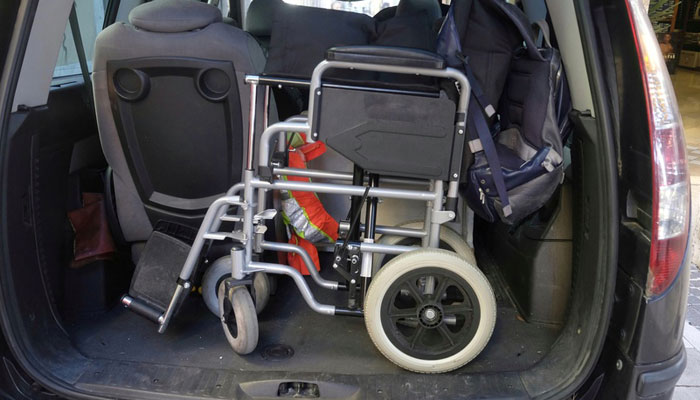
    Wheelchairs and your car

    Transportation can be challenging when the person you care for uses a wheelchair.

    There are two ways to ease the situation:

    A transport wheelchair
    If your loved one does not need a wheelchair all the time, consider a special “transport wheelchair.” Transport chairs are easy to lift, fold, and store. They are ideal for running errands and going to the doctor.

    Transport chairs are not comfortable for long-term sitting. If your relative needs to sit in a chair for hours at a time, buy a padded accessory seat you can carry with you separately.

    A transport chair also requires you to do the pushing. The wheels are much smaller than a standard chair, making it difficult for your relative to propel him- or herself.

    Your car
    Ideally, when buying a wheelchair, check how easily you can take it in or out of your car. And vice versa, when buying a car, include the wheelchair for the test drive:

    • Does the wheelchair fold and fit easily into the foot space of the back seat?
    • If you must put it in the trunk, can you lift it in without hurting your back?
    • Does the car door open in such a way that you can park the wheelchair very close, within the arc of door?
    • Getting in and out, does the car have stable surfaces—the doorframe, back of the seat, handle at the ceiling, or the dashboard—your loved one can easily reach and use for support? If the person you care for is not with you, try getting in and out yourself, compensating for their size and limited strength or flexibility.

    For more information about transporting a loved one, check out our past articles about car gadgets and tips, and the caregiver-friendly car.

    Return to top
    Please Note: Guardian Angel Hospice does not specifically endorse the activities of these organizations, but offers their information as a sample of the kinds of materials and services that are available.
     - D
    You feel so powerless in a hospital. It felt really good to know I could help my father recover faster simply by getting him up and walking."
    Call 800-338-4043

    Fill in this form and one of our caring staff will get back to you.

    • This field is for validation purposes and should be left unchanged.
  • This message is encrypted. Nevertheless, please be mindful of privacy concerns.
  • This field is hidden when viewing the form
    Admin Only Field to pass "Send To" email to GF.
  • By checking this box, I agree to receive SMS messages about hospice from Guardian Angel Hospice at the phone number provided above. We do not pass any individual's consent to receive SMS from Guardian Angel Hospice to any third party. We do not share phone numbers with third parties for the purpose of allowing those third parties to send SMS. The SMS frequency may vary. Data rates may apply. To opt-out, you can choose to not click the checkbox. If you decide to receive messages, you can reply STOP to any message to opt-out at any time. Reply HELP for support. For assistance, please call (800) 338-4043.
    Serving Kokomo, Logansport, Lafayette, Lebanon, Frankfort, Carmel, Indianapolis, and surrounding areas
     
    Logo
    • 800.338.4043
    • Email Us
    • 513 W. Lincoln Rd. Kokomo, Indiana 46902
    • Facebook
    • Twitter
    • LinkedIn

    This website is sponsored by Guardian Angel Hospice, providing compassionate care and support to the seriously ill and their families since 2002. Serving Kokomo, Logansport, Lafayette, Lebanon, Frankfort, Carmel, Indianapolis, and surrounding areas, we are your first choice when looking for hospice care in North Central Indiana. Our office is located at 513 W. Lincoln Rd. Kokomo, Indiana 46902. You can call us at 800.338.4043.

    • Site Map
    • Terms and Conditions
    • Privacy Policy
    • Cookie Policy
    • Feedback

    Non-discrimination Policy: English  |   العربية  |   မြန်မာစာ  |   繁體中文  |   Nederlands  |   Français  |   Deutsch  |   हिंदी  |   日本語  |   한국어  |   Deitsch  |   ਪੰਜਾਬੀ  |   Русский  |   Español  |   Tagalog  |   Tiếng Việt

    © 2002-2026, Guardian Angel Hospice. Site created by Elder Pages Online, LLC.